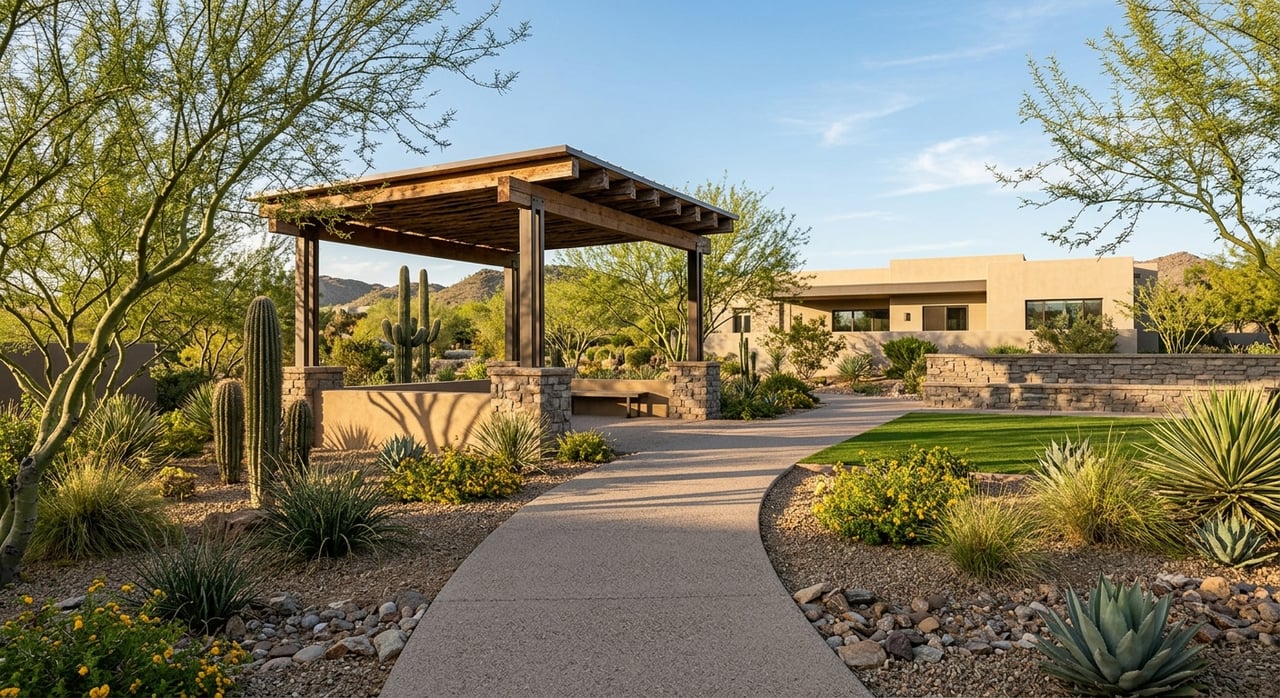
Rancho Vistoso HOA Amenities Guide for Buyers
July 16, 2026
July 16, 2026
Wondering whether Rancho Vistoso’s amenities make HOA dues worth it? If you are shopping in this part of Oro Valley, that is one of the smartest questions you can ask. The answer often comes down to how you use shared spaces, how comfortable you are with community rules, and whether the property sits under just the master HOA or also a sub-HOA. Let’s dive in.
Rancho Vistoso is a large Planned Area Development in Oro Valley that covers about 7,626 acres. For buyers, that matters because the community was designed with a mix of HOA-managed common areas and nearby public recreation.
In practical terms, you are not just buying a house. You are also buying into a broader community structure that shapes how the area looks, feels, and functions day to day.
One of the biggest things to understand in Rancho Vistoso is that not every amenity is funded or managed the same way. The Vistoso Community Association maintains common areas and community amenities, including parks, playgrounds, pedestrian trails, bicycle paths, entrance monuments, and the parkway along Rancho Vistoso Boulevard.
At the same time, some nearby recreation is public rather than HOA-owned. That includes Vistoso Trails Nature Preserve, Honey Bee Canyon Park, and Honey Bee Village Conservation Park. For you as a buyer, that means the lifestyle value of the area comes from both HOA-funded features and town or county assets.
This split can affect how you judge value. If you love trails, parks, and open space, some of what you enjoy may come through your HOA dues, while some may be available as public amenities nearby.
That is why it helps to ask a very specific question before you buy: Which amenities are tied to this property’s HOA structure, and which are simply nearby public features?
Rancho Vistoso’s HOA materials describe the park system in different ways. One community page says there are nine family parks, another says there are 13 parks total including 11 HOA-owned neighborhood parks, and the welcome packet says assessments maintain 11 VCA-owned community parks and playgrounds.
That does not necessarily mean anything is wrong. It likely means different documents use different definitions or reflect updated inventories. Still, as a buyer, you should verify the exact amenity package tied to the home and any sub-association before closing.
Every homeowner and commercial property owner in Rancho Vistoso is part of the VCA master HOA. On top of that, 21 neighborhoods also have sub-HOAs.
That layered structure is important because your total cost may include more than one assessment. If the home is in a gated community, condominium, or another neighborhood with a sub-HOA, you may owe additional fees beyond the master HOA assessment.
For 2026, the VCA master assessment is $108 per quarter for residential owners and builders. That fee supports operating costs, maintenance, repairs, administration, and reserves.
According to the HOA, dues help pay for:
Some neighborhoods add another layer of cost. Siena, for example, pays $217 per quarter in addition to the master assessment.
That kind of add-on is a good reminder that two homes in Rancho Vistoso can have very different ownership costs, even if they seem close together on a map. Before you decide what is affordable, make sure you know whether the property is subject to the master HOA only or to both the master and a sub-HOA.
HOA communities often appeal to buyers who want maintained shared spaces and more consistent community standards. In Rancho Vistoso, dues support a broad range of common-area features that go beyond parks alone.
The HOA defines common areas and amenities broadly. They can include signs, fountains, statuary, buildings, recreation sites, tennis courts, landscaping, sprinkler systems, walls, open space, walking trails, parking lots, and medians.
That means your dues are partly paying for convenience and upkeep, but also for the overall appearance and function of the neighborhood environment. If that matters to you, the fee may feel easier to justify.
The trade-off is governance. More shared maintenance and design consistency usually means more rules, more approvals, and more documents to review.
For some buyers, that structure feels reassuring. For others, it can feel restrictive. The right fit depends on how you like to live and how much flexibility you want after move-in.
If you like to customize your home exterior right away, pay close attention here. The HOA says any exterior modification, addition, or structural change requires prior written approval from the Architectural and Landscape Review Committee.
The review process can take up to 30 days. The HOA also says homeowners may use any approved paint combination from a 24-color palette instead of being limited to neighborhood-specific palettes.
Vehicle rules are another area buyers should review carefully. The HOA says overnight street parking is not allowed, and overnight parking in parks or common areas is also prohibited.
There are also limits on RVs, trailers, boats, and similar recreational vehicles. Parking those outside garages is limited to loading and unloading for up to 48 hours.
If your household has multiple vehicles or you regularly keep an RV or trailer, these rules could have a real impact on your day-to-day experience.
Regular dues are only part of the picture. The HOA says special assessments may also be levied for capital improvements on common facilities with member consent.
That does not mean one is coming. It does mean you should review the association’s financial information, reserve funding, and any pending projects during your due diligence period.
A lower quarterly fee does not always tell the full story. You also want to understand whether reserves appear strong and whether owners may be asked to contribute more in the future.
Arizona gives buyers a formal path to review HOA information before closing. Under the state’s resale-disclosure statute, the association must provide a disclosure packet within 10 days after notice of a pending sale.
That packet must include important records such as:
This matters because HOA documents are not just background reading. The required acknowledgement in the resale packet states that the declaration, bylaws, and rules are a contract between the association and the purchaser.
The association may charge up to $400 in aggregate for resale disclosure and related transfer services. A rush fee of up to $100 and an update fee of up to $50 may also apply in certain situations.
The statute says those fees are collected at close of escrow only once for the transaction. Even so, it is wise to account for them when estimating your closing costs.
If you want to compare homes clearly, use the same HOA checklist for each one. A few targeted questions can quickly reveal whether a home fits your budget and lifestyle.
Ask these before you move forward:
Rancho Vistoso offers a blend of maintained common areas, trail connections, parks, and a planned community setting that many buyers find appealing. But the value equation is not just about curb appeal or scenery. It is about understanding exactly what your dues buy, what rules come with ownership, and whether a sub-HOA changes the cost or restrictions.
If you review the HOA structure carefully, Rancho Vistoso can be much easier to evaluate. The key is to match the property’s amenity package, fees, and rules to the way you actually want to live.
If you want help comparing Rancho Vistoso neighborhoods, reviewing HOA details, or narrowing down homes that fit your goals, Net Properties Real Estate can help you make a more confident decision.
Stay up to date on the latest real estate trends.